
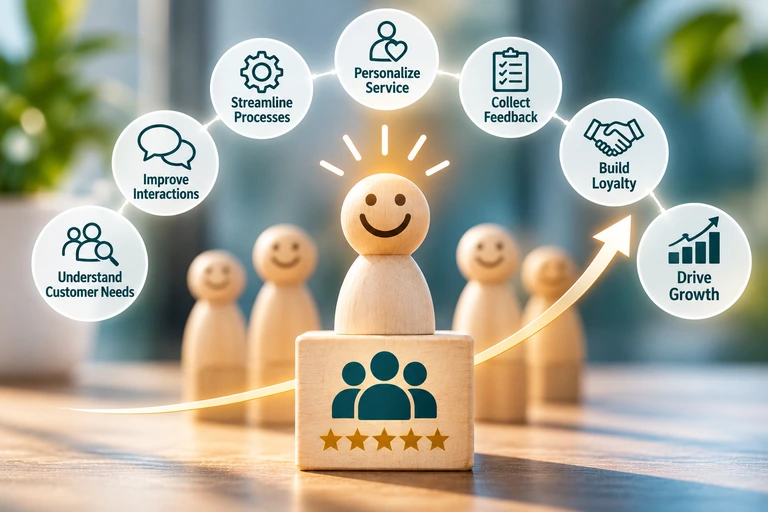
Customer experience plays a major role in how people perceive a business, decide whether to purchase, and determine whether they will return. A competitive product or service may attract attention, but the overall experience often determines whether a customer develops a lasting relationship with a company.
For growing businesses, improving customer experience requires more than providing friendly service. It involves understanding customer expectations, simplifying interactions, maintaining consistent communication, and creating reliable processes across every stage of the customer journey.
A well-designed customer experience strategy can strengthen customer relationships, improve retention, generate referrals, and support long-term business growth.
Understand the Complete Customer Journey
Before improving customer experience, businesses need to understand how customers interact with them. The customer journey typically includes several stages:
- Awareness: A potential customer discovers your business.
- Consideration: They research your services, compare alternatives, and evaluate your credibility.
- Decision: They contact your business, request information, or make a purchase.
- Experience: They receive the product or service and interact with your team.
- Retention: They decide whether to return or continue the relationship.
- Advocacy: Satisfied customers recommend your business to others.
Each stage creates an opportunity to build trust or introduce unnecessary friction. Reviewing the complete journey helps identify where customers experience delays, confusion, inconsistent communication, or difficulty accessing information.
Make Communication Clear and Consistent
Communication is one of the most important elements of a positive customer experience. Customers want to know what to expect, when to expect it, and who they should contact if they need assistance. Unanswered inquiries, unclear pricing, delayed responses, and inconsistent information can quickly damage confidence.
Businesses can improve communication by:
- Responding to inquiries within a reasonable timeframe.
- Providing clear information about products and services.
- Setting realistic expectations for delivery and project timelines.
- Keeping customers informed about important updates.
- Making contact information and support channels easy to find.
Consistency is equally important. Customers should receive the same quality of information and service regardless of which employee or communication channel they use.
Simplify the Customer Experience
Complicated processes create unnecessary barriers between customers and businesses. Consider how easy it is for someone to find information, request a quote, schedule a consultation, complete a purchase, or receive support.
If customers have to navigate confusing website pages, complete unnecessary forms, repeat information, or contact multiple departments to resolve a simple issue, the experience becomes frustrating.
Businesses should regularly review their processes and remove unnecessary steps. A streamlined customer experience may include:
- Simple website navigation.
- Clear service descriptions and pricing information.
- Convenient inquiry and booking processes.
- Accessible customer support.
- Efficient payment and follow-up procedures.
The objective is to make every interaction as straightforward as possible.
Use Customer Feedback to Identify Opportunities
Businesses sometimes assume they understand what customers want without collecting enough feedback to confirm those assumptions. Customer feedback provides valuable insight into what is working and what needs improvement.
Useful feedback methods include:
- Customer satisfaction surveys.
- Online reviews and testimonials.
- Post-purchase follow-up emails.
- Direct conversations with customers.
- Support requests and complaint analysis.
However, collecting feedback is only the first step. Businesses must review the information, identify recurring problems, and take meaningful action. For example, repeated complaints about slow responses may indicate a need for better communication procedures, additional support resources, or automated notifications.
Turning feedback into operational improvements helps businesses build stronger customer relationships.
Personalize Customer Interactions
Customers appreciate businesses that understand their needs rather than treating every interaction as identical. Personalization can be as simple as remembering previous conversations, understanding a customer's preferences, or recommending services based on their requirements.
Customer relationship management (CRM) systems can help businesses organize customer information, track communication history, manage inquiries, and coordinate follow-ups. When used properly, these tools allow teams to provide more relevant and consistent interactions.
Personalization should always serve a practical purpose: making the customer experience more useful, convenient, and relevant.
Use Technology and Automation to Improve Service
Technology can help businesses deliver faster and more consistent customer experiences. Automated appointment confirmations, inquiry notifications, follow-up reminders, and customer communication workflows can reduce manual work while helping prevent missed opportunities.
AI-powered tools can also assist with customer inquiries, information management, and repetitive support tasks. However, automation should not make customer interactions feel impersonal. Businesses need to identify which processes benefit from automation and which situations require direct human attention.
Our article on AI and business automation explores how technology can improve operational efficiency when applied to the right business processes.
Measure Customer Experience Performance
Improving customer experience requires measurable objectives rather than relying entirely on assumptions. Businesses can monitor several important indicators:
- Customer Satisfaction Score (CSAT): Measures how satisfied customers are with a particular interaction or experience.
- Net Promoter Score (NPS): Measures how likely customers are to recommend the business.
- Customer Retention Rate: Tracks the percentage of customers who continue doing business with the company.
- Customer Churn Rate: Measures the rate at which customers stop using a product or service.
- Response Time: Tracks how quickly customer inquiries receive a response.
- Customer Lifetime Value (CLV): Estimates the total value a customer generates throughout the relationship.
Not every metric will be equally relevant to every organization. Select indicators that align with your business objectives and review them consistently.
For a broader approach to measuring performance and identifying opportunities, read our guide on data-driven business decisions.
Build Consistent Processes Across Your Organization
A positive customer experience should not depend entirely on individual employees or occasional exceptional service. Businesses need reliable processes that help teams deliver consistent results.
This includes documenting communication standards, defining responsibilities, establishing service procedures, and creating clear methods for handling customer requests and complaints.
A structured business operating system can connect people, processes, technology, and performance measurement to support a more consistent customer experience. When responsibilities are clear and processes are standardized, employees can focus more effectively on serving customers.
Turn Customer Experience Into a Competitive Advantage
In competitive markets, customers often have several businesses to choose from. Price and product quality matter, but the overall experience can influence which company earns their trust.
Businesses that make interactions easier, communicate consistently, respond to feedback, and deliver on their promises have more opportunities to develop lasting relationships.
Customer experience should therefore be treated as an ongoing business priority rather than a one-time improvement project. Regularly review customer feedback, monitor performance indicators, improve internal processes, and adapt to changing expectations.
Final Thoughts
Improving customer experience requires a coordinated approach that connects communication, technology, customer feedback, and operational processes.
Businesses that understand their customers and consistently improve the way they deliver products and services can build stronger relationships, encourage repeat business, and create a more sustainable foundation for growth.
At Moldavite Business Booster, we help businesses clarify their priorities, improve operations, and implement practical strategies that support long-term performance.
Ready to improve the way your business serves its customers? Contact our team to discuss how we can help you build more efficient processes and create a stronger customer experience.
← Back to all posts